
LIVING LEGACY
At Kalesma, we believe heritage has the power to shape the present.
Open to both sunrise and the glow of Delos at sunset, the hotel unfolds like a contemporary Cycladic village shaped by light, sea, and horizon.
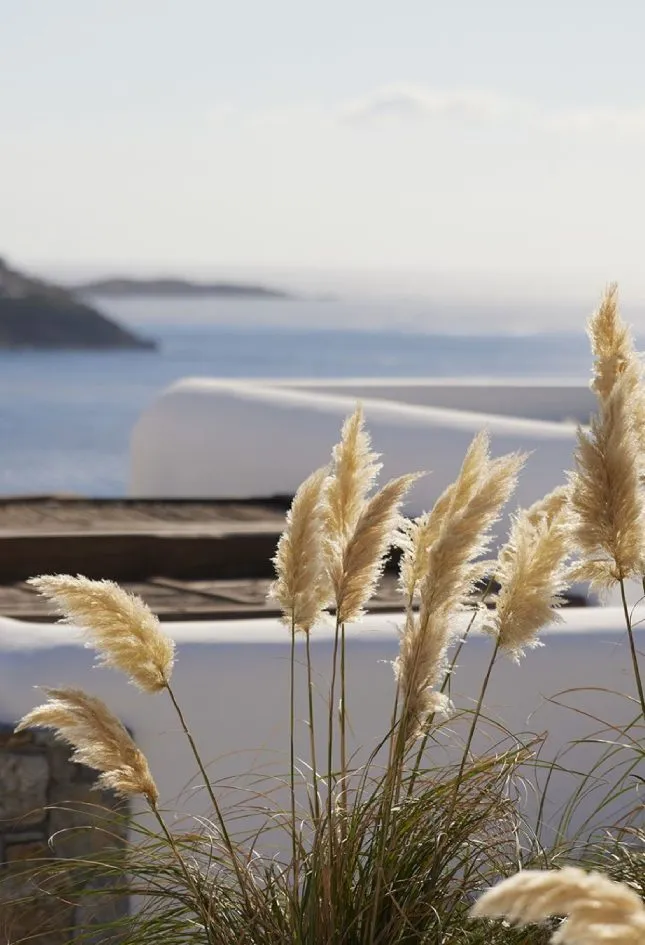

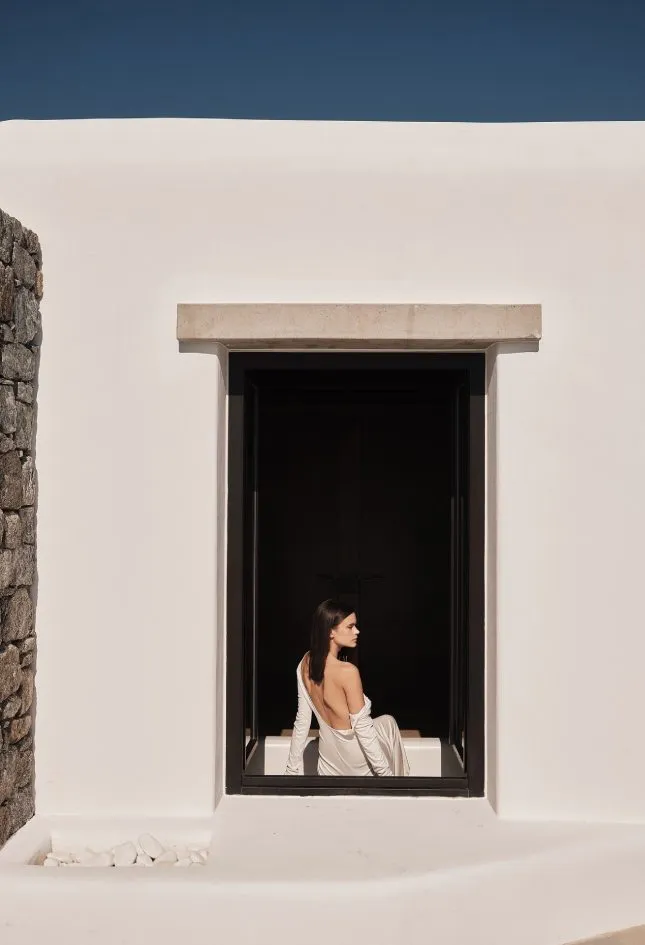
MORE THAN A RETREAT, KALESMA IS A MODERN EXPRESSION OF MYKONIAN HERITAGE … A BRIDGE BETWEEN PAST AND PRESENT, BETWEEN RAW BEAUTY AND REFINED COMFORT.
TRADITIONS ARE NOT REPLICATED; THEY ARE REINTERPRETED. CRAFTSMANSHIP, MATERIALITY, AND SCALE HONOUR THE ISLAND’S LEGACY, WHILE CONTEMPORARY DESIGN INTRODUCES A QUIET, HARMONIOUS CONTRAST..


HERE, RAW BEAUTY AND REFINED COMFORT COEXIST WITHOUT EXCESS.


Kalesma was born by longtime friends Makis Kousathanas and Aby Saltiel, united by a shared bond with Mykonos and a deep respect for its spirit
Long before Kalesma existed, Makis would stand on this very hill — then nothing more than rock and his grandparents’ modest home — gazing toward the horizon beyond Delos, sensing the energy and rare beauty of the place. A question stayed with him: how could others experience this privilege, this light, this sense of openness?
For Aby, Mykonos was lived from the shoreline. Summers by the sea with family created a bond that felt instinctive and familiar — the island less a destination, more a place one belonged to. What remained with him was not only the landscape, but the kindness and open-hearted spirit of the locals, a generosity that made even strangers feel at home.
Over time, Mykonos was not somewhere to escape to, but somewhere to return to…instinctively, repeatedly, as one returns home.
Together, they envisioned a place that honours Mykonos as it is truly lived simply, generously, and with depth.
Kalesma is the continuation of that story.
It begins with philoxenia, the instinctive Greek tradition of welcoming the stranger as a friend. Here, hospitality is not performative, nor scripted. It is intuitive, attentive, and deeply human. Guests are not managed, they are known. Care is offered with discretion. Comfort feels familiar. Freedom feels secure.
Every detail is considered with intention. From architecture and materiality to gastronomy and curated experiences, craftsmanship guides each decision. Local artisans, farmers, and storytellers are not collaborators at the margins, they are part of the narrative. Through these relationships, the island’s cultural vitality is preserved and allowed to evolve.
Sustainability is approached as responsibility rather than statement. To honour Mykonos means to protect its landscape, its traditions. Luxury here is not excess. It is clarity, balance, and restraint.
Purposeful hospitality is ultimately about connection. Between guest and place. Between heritage and present moment. Between individuality and belonging.
It is an approach that transforms a stay into something lasting, not through spectacle, but through meaning.

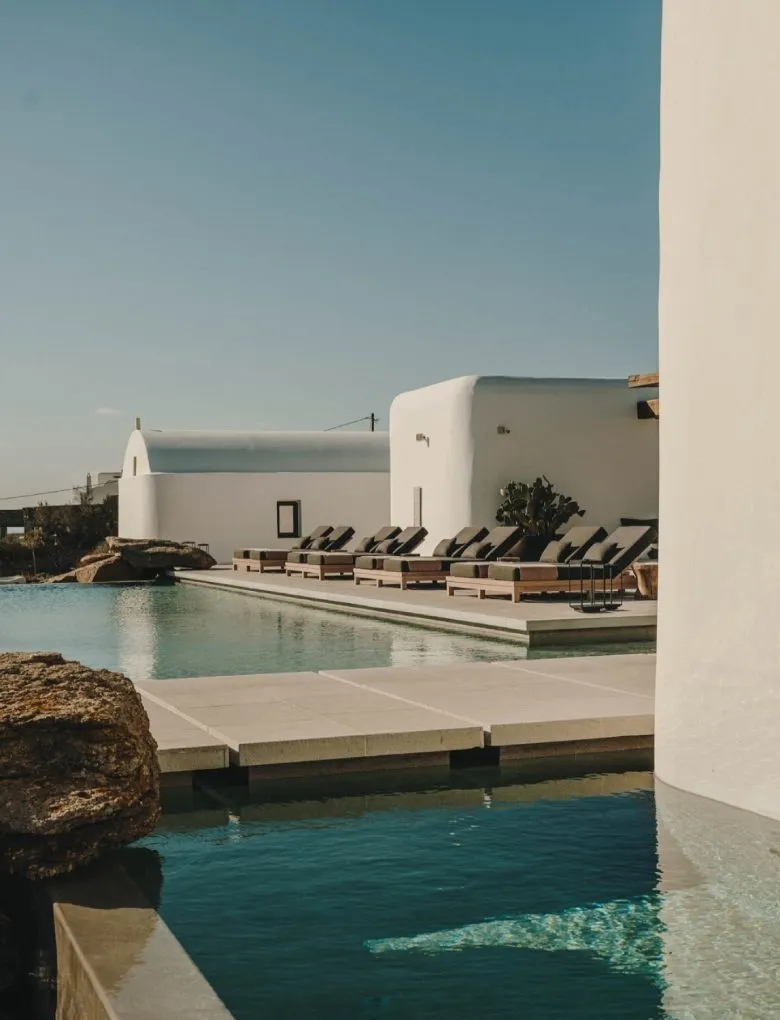
In antiquity, it stood in the shadow of Delos — one of the most sacred islands of the ancient Greek world and a major religious and commercial centre of the Aegean. While Delos held divine status as the mythological birthplace of Apollo and Artemis, Mykonos remained inhabited, grounded, and human — a working island of fishermen, farmers, and seafarers shaped by wind, stone, and sea.
Over time, its stark beauty began to draw a different kind of visitor. In the 1960s and 1970s, Mykonos emerged as a discreet refuge for artists, intellectuals, and the international jet set. Drawn by its raw landscape, liberal spirit, and sense of freedom, personalities from around the world transformed the island into a symbol of cosmopolitan elegance without ever erasing its Cycladic soul.
Today, Mykonos balances contrast with confidence. It is known for its vibrant nightlife and refined gastronomy, yet beyond the energy lies an island of extraordinary natural diversity. More than 25 beaches circle its coastline — from organised stretches such as Ornos and Psarou to quieter coves accessible only by boat. Traditional chapels punctuate the hills. Inland villages preserve a slower rhythm of life. The iconic windmills of Chora remain a reminder of the island’s maritime past.
Mykonos continues to evolve, yet its essence endures: light of rare clarity, whitewashed architecture, the constant presence of the Meltemi wind, and the open horizon of the Aegean.
To experience the island fully is to move beyond its surface — to explore its history, its landscapes, and the culture that shaped it.
Mykonos invites discovery.